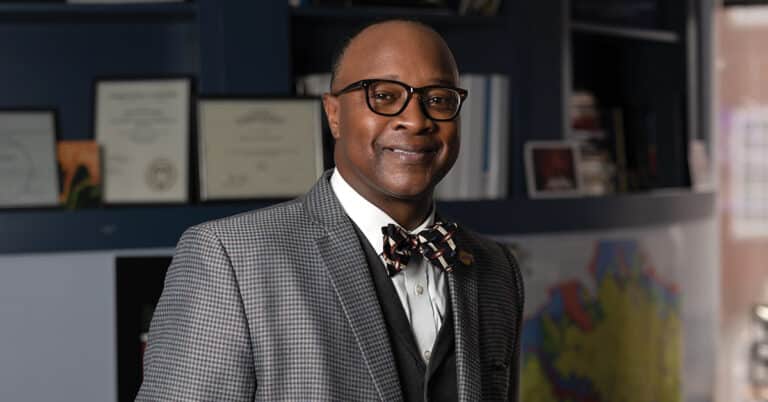


With a career spanning advertising, marketing and brand building, Tommy McKinnon has spent years working at the intersection of strategy and storytelling. Along the way, he’s had a front-row seat to moments that matter most—leading teams, mentoring young professionals and collaborating with mission-driven colleagues and community partners. Those experiences have shaped a leadership philosophy rooted in compassion, empathy and clarity, and reinforced a belief that true success is defined less by titles and accolades and more by relationships and lasting impact. That perspective is reflected in his book, 22 Things, which distills the lessons learned throughout his career into practical guidance for personal and professional growth. In this conversation, McKinnon shares the insights behind the book, reflects on the experiences that shaped his path, and discusses what continues to drive his passion for helping others grow with purpose.
“At every stage, I’ve been passionate about helping people grow. Whether through coaching, writing or speaking, my work has always centered on encouraging others to discover their strengths and navigate their careers with purpose.”
What inspired you to write 22 Things, and at what point in your career did you realize these lessons were worth putting on paper?
22 Things didn’t start as a book idea—it started as a pattern I kept noticing. Over the years, I saw the same simple principles show up in successful people across industries. These weren’t groundbreaking theories but simple, everyday behaviors that over time produced noticeable results. I realized these lessons were worth writing down after years of mentoring young professionals and reflecting on my own missteps. So many people struggle not because they lack talent, but because no one ever taught them the “unwritten rules” of work and relationships and how they evolve into leadership opportunities. Eventually, I reached a point in my career where experience met perspective. Writing 22 Things became a way to capture those lessons in one place—so others wouldn’t have to learn everything simply through trial and error.
The book focuses on building a personal brand. What does that really mean for young professionals early in their careers?
When I talk about a personal brand, I’m not talking about branding through social media or self-promotion. I’m talking about the perspective from the other person’s view—the story people tell about you when you’re not in the room. For young professionals, that story is shaped by how you show up every single day. Early in your career, your brand is built less on expertise and more on reliability, attitude and effort. Do you return emails and calls? Do you take ownership? Do people feel respected and heard after interacting with you? Those small behaviors add up faster than most people realize. Everyone has a personal brand, whether they’re intentional about it or not. My goal with 22 Things is to help people build a brand rooted in trust and consistency.
Is there one “thing” from the book people often overlook but that makes the biggest difference long-term?
There are many, but one of the most overlooked principles that I write about in the book is the importance of closing the loop—following through, communicating clearly, finishing what you start. It sounds simple, but it’s surprisingly rare, which makes it powerful. Over time, that habit builds credibility faster than talent or ambition alone. People trust those who consistently do what they say they’ll do, and trust creates connections and opens doors that résumés never will. I’ve learned that careers are rarely derailed by big failures. More often, they stall because of small inconsistencies. Mastering the basics creates momentum that lasts.
How has your work in healthcare shaped your leadership perspective?
Healthcare has reinforced that leadership is a responsibility, not a spotlight. Decisions affect real people in vulnerable moments, which creates a deep respect for integrity, empathy and remaining calm under pressure. Working in this environment has shaped my belief that influence is earned through service and that people matter more than processes.
“The best leaders don’t seek attention—they create stability, clarity and confidence for others. They remove barriers to success for their teams. If leaders can coach individuals to move toward a certain goal, they will move the department and, thus, the organization forward.”
For those being recognized in our 40 Under 40 class, what habits or mindsets do you see consistently?
The high-performing young leaders I see tend to share a few key traits: curiosity, humility and resilience. They ask good questions, listen well and they remain open to feedback—even when it’s uncomfortable. They also understand that success is built through relationships, not shortcuts. They show up, take responsibility early and don’t see any task as being beneath them. Most importantly, they focus on adding value rather than seeking validation—to the project, to the department, to the team and to the organization. That mindset alone sets them apart.
How do you balance ambition with authenticity in today’s professional world?
I don’t believe ambition and authenticity are opposites. The most effective leaders align the two. For me, ambition is about purpose—not comparison—and authenticity starts with knowing who you are and what you value. God has blessed each of us with unique skill sets and abilities. The goal is to identify these and then leverage them for the good of all. If you can match the best of who you are each day—your personal mission—with the mission of your organization, you’re already a step ahead in creating an abundant career path.
What advice would you give to someone who feels stuck or unsure about their next step?
Feeling stuck is often a sign that growth is coming, not that something is wrong. I encourage people to focus on the next right step rather than the perfect long-term plan. Momentum comes from action—learning something new, asking for feedback, saying yes to an opportunity that stretches you. Clarity usually follows movement, not the other way around. Most importantly, a season of uncertainty doesn’t define you. How you respond to it does.
Looking ahead, what do you hope readers take away from 22 Things, professionally and personally?
Professionally, I hope readers gain clarity and confidence—understanding that success is built through simple, repeatable behaviors practiced over time. Personally, I hope the book gives people permission to define success on their own terms. A meaningful life isn’t built on comparison; it’s built on intention, gratitude and service. Spiritually, I hope readers will realize we all need a compass to provide direction. Above all, I hope 22 Things encourages people to show up fully, live with purpose and keep growing—wherever they are in their journey.
Just for FUN!
What business book or podcast do you recommend?
Leadership and Self-Deception by the Arbinger Institute. Highly recommended!
What’s on your playlist?
The Red Clay Strays, Brandon Lake, Linkin Park and The Stews.
If you could have dinner with anyone (dead or alive) who would it be and why?
I would love to dine with Bono of U2. I am overwhelmed by his worldwide influence across multiple generations, candidly sharing his perspectives on poverty, caring for others and his Christian faith.