

The Defense Economy: Strength Through Service
From F-35s at Dannelly Field to the technology that keeps the Air Force running, the River Region’s military missions reach around the world. Here’s how they connect, and why their future and ours are the same story.
Mission sponsor: Montgomery Regional Chamber of Commerce
ONE REGION, MANY MISSIONS
Ask most people in the River Region what happens at Maxwell Air Force Base, and you’ll probably hear two words: Air University. That’s true, but it’s only part of the story.
At Dannelly Field, the Alabama Air National Guard’s 187th Fighter Wing flies the F-35, one of the world’s most advanced fighter aircraft. At Maxwell, the 908th Flying Training Wing prepares aircrews to fly the Air Force’s new MH-139A Grey Wolf helicopter. At Gunter Annex, military and civilian professionals manage technology systems that help pay Airmen, track equipment, maintain records and keep the Air Force operating.
The 42nd Air Base Wing supports more than 40 mission partners at Maxwell-Gunter, helping hold those missions together.
“Maxwell-Gunter has a much bigger reach than I think most people realize,” said Col. Mike Gallucci, commander of the 42nd Air Base Wing. “Our futures really are connected.”
That reach extends beyond the installation gates, bringing skilled workers and visiting trainees into the region, creating opportunities for defense contractors and local businesses, and strengthening the case for investing in technology, education and infrastructure.
Military missions also need a community where people want to live, families can thrive and businesses can find the talent and partnerships to grow. For Montgomery and surrounding communities, understanding that connection is the first step toward making the most of the defense economy already here and preparing for what comes next.
A GREAT AMERICAN DEFENSE COMMUNITY
The River Region has been recognized as a Great American Defense Community for supporting service members, veterans and military families. The designation reflects a relationship that extends beyond the installation gates.
MEET THE MISSIONS
42ND AIR BASE WING | MAXWELL-GUNTER
- Mission: Installation support, security, logistics and services for Maxwell-Gunter and its mission partners.
- Leader: Col. Mike Gallucci
- Why It Matters: Keeps installations running so other missions can focus on training and national defense.
187TH FIGHTER WING | DANNELLY FIELD
- Mission: Alabama Air National Guard wing operating the F-35 and preparing Airmen for state and national missions.
- Leader: Col. John D. Caldwell
- Why It Matters: Brings advanced fighter capabilities to the region, backed by experienced Airmen.
908TH FLYING TRAINING WING | MAXWELL
- Mission: Alabama’s only Air Force Reserve wing and the formal training unit for all Air Force MH-139A Grey Wolf pilots and special mission aviators.
- Commander: Col. Shane Devlin
- Why It Matters: Supports helicopter training and combat missions with medical, engineering, firefighting and logistics personnel.
BUSINESS & ENTERPRISE SYSTEMS | GUNTER ANNEX
- Mission: Develops, modernizes and sustains Air Force business technology systems.
- Leader: Alvin F. Burse, Portfolio Acquisition Executive and Director
- Why It Matters: Supports pay, benefits, equipment tracking and maintenance records that help keep missions ready.
THE MISSIONS, PEOPLE AND TECHNOLOGY
The 42nd Air Base Wing provides the support that allows Maxwell-Gunter’s other missions to operate. “Our job is to provide premier combat service support so our mission partners can focus on what they do best,” Gallucci said.
Those partners include Air University, which educates military leaders and develops talent for the Air Force and its joint and international partners; the 187th Fighter Wing; the 908th Flying Training Wing; and Gunter’s defense technology organizations.
The 908th’s Grey Wolf mission brings students to the River Region for extended training. “They will live, shop, eat and socialize in the local community and surrounding areas,” said Bradley J. Clark, the wing’s public affairs director of operations.
That creates opportunities for local restaurants, retailers, housing providers and other businesses. With more than 50 career fields, the wing also offers potential connections with regional schools, universities and employers across technical, administrative, medical, engineering and logistics specialties.
WHO SERVES HERE?
908th Flying Training Wing
- 1,049 members
- 65% are from Alabama
- 70% travel more than 50 miles to serve; 30% travel more than 150 miles
- 94% reenlist after their first term
187th Fighter Wing
- Approximately 98% manning, according to the figures provided for this feature
THE VALUE OF EXPERIENCE
Capt. Michael Luangkhot | 187th Fighter Wing
Unlike active-duty personnel who may move between assignments, many Guard members serve at the same installation for much of their careers. Members complete the same rigorous training pipelines and technical schools as their active-duty counterparts, then bring those skills to civilian jobs across Alabama. The wing also attracts experienced pilots and maintainers leaving active duty who want to continue serving while maintaining civilian careers.
THE TECH AT GUNTER: MODERNIZING THE MISSION
While Maxwell develops Air Force leaders, Gunter keeps the enterprise running through technology. The Business & Enterprise Systems Directorate manages systems supporting Air Force personnel, finances, equipment and operations worldwide, from pay and benefits to equipment tracking and aircrew certifications.
Rich Aldridge, Executive Vice President for Growth at Shee Atika Government Services and a Millbrook native, compares the complexity to running Walmart, with its vast workforce, inventory and supply chain. “The Air Force, in many ways, is even more complex,” he said.
For Alvin F. Burse, Portfolio Acquisition Executive and Director of Business & Enterprise Systems, the priority is modernizing the Air Force’s digital backbone through connected systems, cloud-ready applications and stronger cybersecurity. Artificial intelligence can help analyze legacy software, identify decades of embedded business rules and support modern replacements.
Burse describes the shift as moving software “from a passive administrative tool into an intelligent teammate.” The goal is to speed up workflows, improve decisions and reduce administrative burdens so Airmen can focus on the mission.
HOW AI IS CHANGING THE WORK
- Untangling old code: AI can identify rules embedded in older systems and speed application modernization.
- A more connected enterprise: Burse said Business & Enterprise Systems is moving toward cloud-ready, modular architectures and stronger cybersecurity.
- Mission first: The directorate is pursuing AI where it can accelerate decisions, shorten business cycles and reduce administrative work.
MARK YOUR CALENDAR
The Department of the Air Force Information Technology and Cyberpower Conference (DAFITC): Every August
NEED TO KNOW: DEFENSE IS ECONOMIC DEVELOPMENT
For the Montgomery Regional Chamber, the defense mission is also an economic development opportunity.
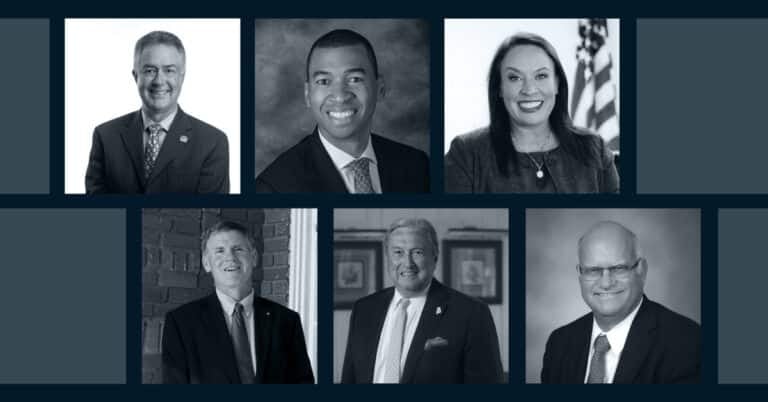
“These missions are national assets, but they are also opportunities to grow our technology sector, strengthen our workforce and bring new investment to the region,” said Robert Birmingham, the Chamber’s 2026 chairman.
Gunter’s workforce includes military, civilian and contractor personnel specializing in cybersecurity, cloud architecture, software engineering, program management and data science. Local universities help build that pipeline through education and training.
The Grey Wolf training mission creates another private-sector connection. Its manufacturers, Leonardo and Boeing, are part of a larger aviation ecosystem that can bring business opportunities and technical expertise to the region. The 908th’s more than 50 career fields also create potential partnerships with local employers and educators.
Aldridge sees room for Montgomery to build on that foundation. Alongside Gunter’s missions, he points to the Meta data center and initiatives such as Montgomery Tech Lab as parts of a growing technology ecosystem.
“I always say Montgomery is a hidden gem of the South,” Aldridge said. “The River Region has a prime opportunity to grow into a high tech hub in its own right.”
CHAMBER VOICES
Robert Birmingham | 2026 Chairman, Montgomery Regional Chamber
Birmingham sees the next phase as connecting existing military assets to new investment, workforce development and stronger relationships between the defense community and local businesses.
“The opportunity is to build around them in a way that strengthens both our national defense and our regional economy,” he said.
Gary Harrison | President and CEO, Dixie Electric Cooperative; 2027 Chamber Chair-Elect
Through Dixie Electric Cooperative’s partnership with Central Alabama Electric Cooperative, Harrison’s team supports electric infrastructure serving Maxwell and Gunter.
“Reliable infrastructure supports mission readiness and allows installation leadership to stay focused on its primary mission,” Harrison said.
Stacia Robinson | Director, Alabama Office of Civic Engagement; President, BeneChoice Companies; Immediate Past Chairman
Robinson wants Montgomery to become an even more attractive place for service members, veterans and military spouses to start, build and grow businesses. Her perspective connects the defense economy to entrepreneurship and quality of life, with welcoming communities creating opportunities for military families to contribute to the region’s business future.
NEED TO KNOW: READINESS DOESN’T STOP AT THE GATE
The River Region’s Great American Defense Community designation recognizes the relationship between the military and surrounding communities. It is more than a title; it is a standard the community must continue to meet.
Gallucci points to the joint-use runway at Dannelly Field, the Maxwell Capital Gateway, resilience planning and a Washington Ferry Road improvement project estimated at $4 million to $6 million.
Infrastructure projects can serve military and community needs. Storm resilience planning, for example, can protect residents while supporting installations that depend on reliable roads and services. Harrison sees the same connection in the electric infrastructure supporting Maxwell-Gunter.
Caldwell has served at installations worldwide and said supportive communities cannot be taken for granted.
“You can have the best people, you can have the best airplanes, but if you don’t have a supportive community, readiness will decline,” he said.
For Gallucci, the relationship is personal. Military families share neighborhoods, schools and sports teams with everyone else.
“There is no us and them when it comes to the community,” he said. “Our spouses work in your community. Your spouses work on our installation. You coach our children in sports. We coach your children in sports… There is no line between that perimeter fence.”
THE FUTURE AND HOW YOU CAN HELP
The next five years could bring significant changes to the River Region’s military and technology missions. The 908th is preparing to expand its Grey Wolf training role. The 187th is exploring new ways to employ the F-35 alongside unmanned aircraft. At Gunter, modernization and AI are changing how the Air Force manages its business systems.
For Birmingham, the opportunity is to grow alongside those missions by preparing the workforce, strengthening infrastructure and building connections that turn defense investment into broader regional opportunity.
Robinson shares that vision: a Montgomery known not only for supporting the defense mission, but also for turning that relationship into opportunities for families, businesses and the community.
THE 2030 FORECAST
GREY WOLF TRAINING GROWS
The 908th is expanding its MH-139A Grey Wolf training mission and pursuing additional opportunities, including potential heavy maintenance or a weapons school.
F-35 AND UNMANNED AIRCRAFT
The 187th is preparing for collaborative combat aircraft, unmanned systems designed to operate alongside crewed fighters, bringing potential new missions to Dannelly Field.
FASTER, SMARTER TECHNOLOGY
Gunter expects AI and modern software to accelerate acquisition and improve predictive maintenance, financial reconciliation and supply chain efficiency.
A HOMEGROWN TECH WORKFORCE
Burse sees opportunities to develop local talent through university, business and public-sector partnerships, including cyber apprenticeships and internships.
INFRASTRUCTURE FOR WHAT’S NEXT
Future missions depend on reliable power, connectivity, facilities and infrastructure to support regional growth.
“It sounds like sci-fi stuff. This is real.” — Col. John D. Caldwell, 187th Fighter Wing
WHAT YOUR BUSINESS CAN DO
The defense economy extends beyond companies selling directly to the military. River Region businesses can strengthen the community and benefit from the people and opportunities connected to its military missions.
- Hire military spouses. Recognize their skills and experience and help families settle into the region.
- Make credentials portable. Where licensing rules allow, help military spouses understand credential requirements and navigate the process of returning to work.
- Welcome students who arrive midyear. Military children sometimes change schools outside the usual enrollment cycle. A welcoming school community can ease the transition for the whole family.
- Build the workforce pipeline. Connect with local schools, colleges and universities to help students explore cybersecurity, aviation, engineering and other careers that overlap with military needs.
- Create partnerships. The 908th has more than 50 career fields, and the 187th offers Guard careers connecting military service with civilian life. Explore opportunities to share expertise, provide training or create employment pathways.
- Support the people behind the mission. A simple welcome, an expression of thanks or help connecting a military family with the community can strengthen the relationship between installations and residents.
OUR FUTURES ARE CONNECTED
The River Region already has the missions, people and partnerships that make it a defense community. The opportunity now is to build on that foundation by connecting military needs with local talent, supporting families and investing in infrastructure that allows the community and its installations to thrive.
As Gallucci puts it, when the community and military work together on infrastructure, families, workforce and shared challenges, “we’re not just making the community stronger… We’re making Maxwell-Gunter more ready.”