

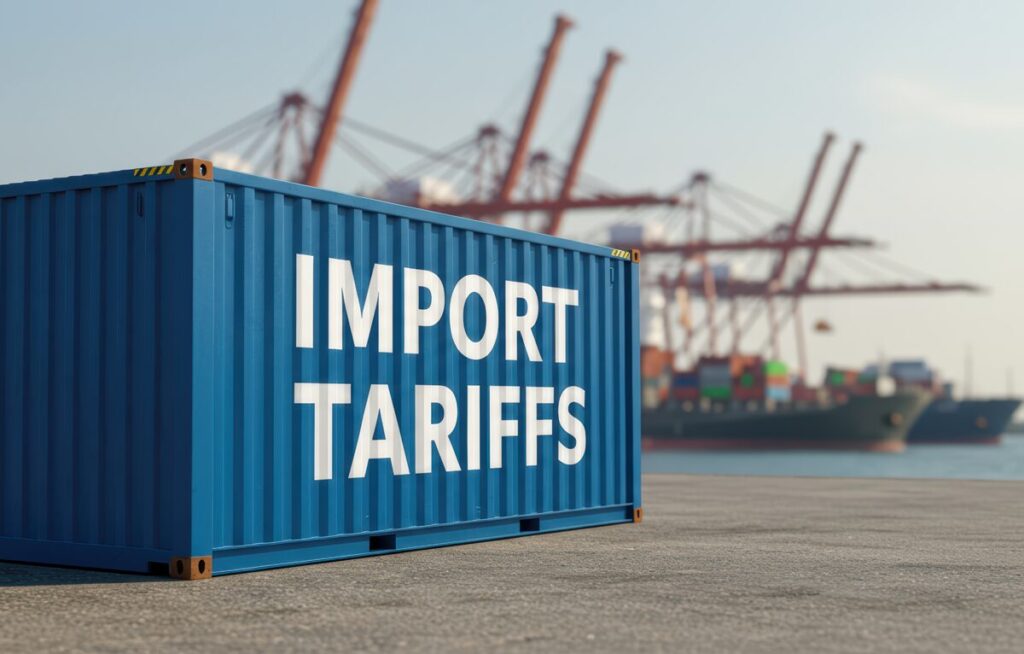
Earlier this year, uncertainty about tariffs dominated the headlines, prompting many local businesses to proceed with caution. Throughout the spring, questions lingered about how these tariffs would ultimately affect the marketplace. Over time, however, it became clear that the primary goal was to encourage trade partners to negotiate new agreements—a shift that has gradually brought more stability and reassurance to local businesses.
Today, companies have a clearer understanding of the tax landscape compared to just a few months ago. This increased clarity has contributed to a steadier business environment. “Businesses saw in the ‘Big Beautiful Bill’ that provisions enacted several years ago would become permanent, and that gave them a stronger basis for planning and managing expenses,” said Draper Stanford, Senior Vice President and Regions Commercial Banking Relationship Manager.
Tariffs in Action: How Costs Are Playing Out Locally
As a result of recent tariffs, local businesses are thinking more strategically—reassessing supply chains, exploring new partnerships and seeking ways to strengthen their competitive edge. While tariffs have introduced some cost pressures, most local businesses are adapting well, according to Stanford.
“We’ve had some companies report single-digit increases, and the impact has been somewhat offset by stabilization in other line items like freight and insurance premiums,” Stanford said. “Business balance sheets are generally healthy, which allowed for increased inventory purchases ahead of tariff impacts on costs.”
Supply chains, once a major source of concern, have also stabilized. “I wouldn’t describe what we’ve seen so far as wholesale changes in terms of new suppliers or upending timelines,” Stanford said. “Some suppliers use tariff discussions as reasons for price increases, but generally, they are only taking relatively small increases so far. Local companies are evaluating options, and some are stockpiling inventory at current prices. Multi-national companies are monitoring closely and will adjust global supply chains as needed, including onshoring production in the U.S. when feasible.”
Resilience in the Face of Change
Stanford emphasizes that local companies have become more adept at navigating uncertainty in recent years.“The uncertainty around tariffs earlier this year caused clients to position themselves in a ‘wait-and-see’ mode. With more certainty now, especially from a tax perspective, clients are better positioned to plan expenses, including paying for potential expansions or investments in their companies,” Stanford said. “There are still variables as we think about interest rates, costs and so forth, but this brings up a point we’ve seen time and again, especially since 2020: Businesses have gotten really good at handling uncertainty. They are strong. They are resilient.”
Consumer Confidence: A Steady Foundation
The consumer side of the economy remains stable. “Consumers are maintaining good liquidity and managing their debt levels well,” Stanford said. “Some are spending a little less on luxury items, but consumer sentiment is still positive on the economy.
Looking Forward: Control What You Can
Stanford’s advice for local business owners is practical: “Focus on what you can control. There are a lot of issues that are outside the direct control of business clients, so we encourage our clients to lean into the things they can control to better prepare for what comes next.”
One of those controllable areas is cash flow. “Cash flow is one of the biggest things businesses can maximize now to ensure they have tight control over their cash management strategies. Automating accounts payable and accounts receivable are great places to start,” Stanford said.
Emerging trends like artificial intelligence are also creating new opportunities for companies to boost productivity and reduce costs, helping to offset challenges such as a tight labor market and rising wages. With the right strategies and guidance, local businesses are well-positioned to manage risks and seize new opportunities.
Momentum in Investment
Despite global uncertainties, many mid-sized businesses and certain real estate sectors are moving forward with growth plans. “Pipelines are starting to expand,” Stanford said. “We’re seeing growth in the energy sector, asset-based lending and some manufacturing. Clients have a large amount of liquidity on their balance sheets, so many are well-positioned to make critical purchases now, while taking a ‘wait-and-see’ approach for other [less timely] projects until they see rates go further down.”
Major local developments are also fueling optimism. Projects like the inland port, Hyundai’s expansion, new facilities for Diageo and Meta, and others are expected to deliver long-term economic benefits. Maxwell-Gunter Air Force Base remains a key economic driver, and new attractions—such as Montgomery Whitewater and the redevelopment of the corridor from downtown to Maxwell—are strengthening the city’s growing service and tourism sectors.
A Tool for Uncertain Times
Businesses don’t have to navigate economic shifts alone. Regions offers the Greenprint® plan—a free, personalized financial plan for individuals and businesses. This plan helps clients strengthen savings, manage expenses, reduce debt and set clear goals. It’s available at any Regions branch and open to non-customers as well.